
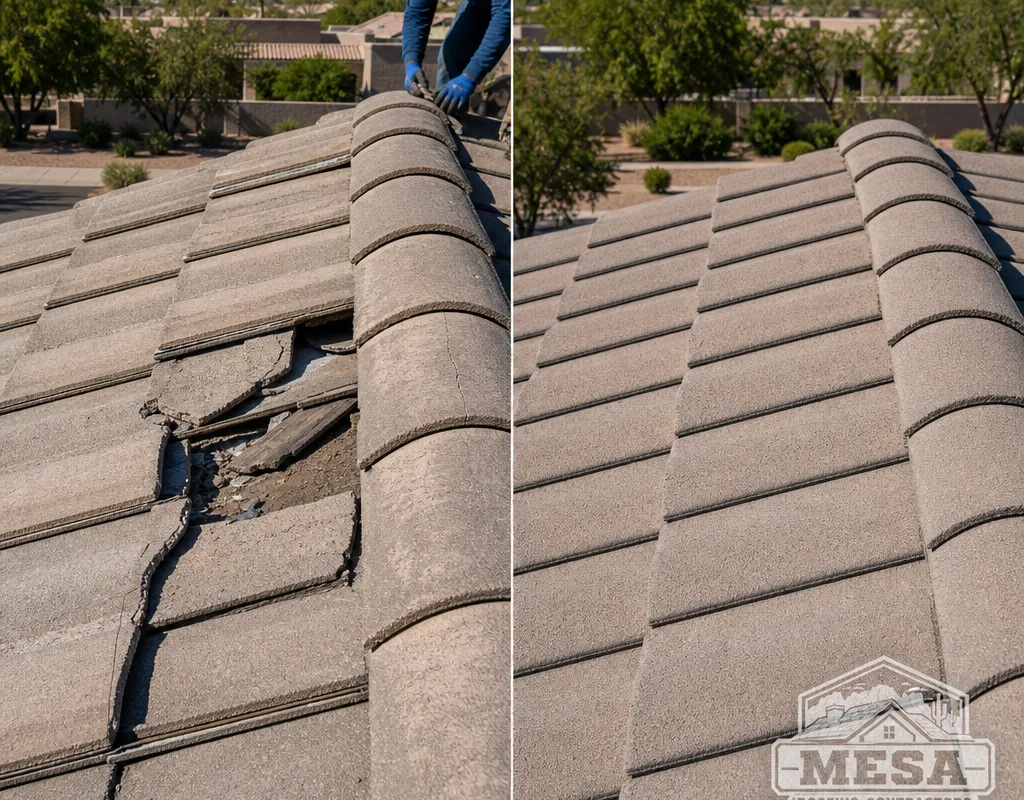
Cracked or broken tiles
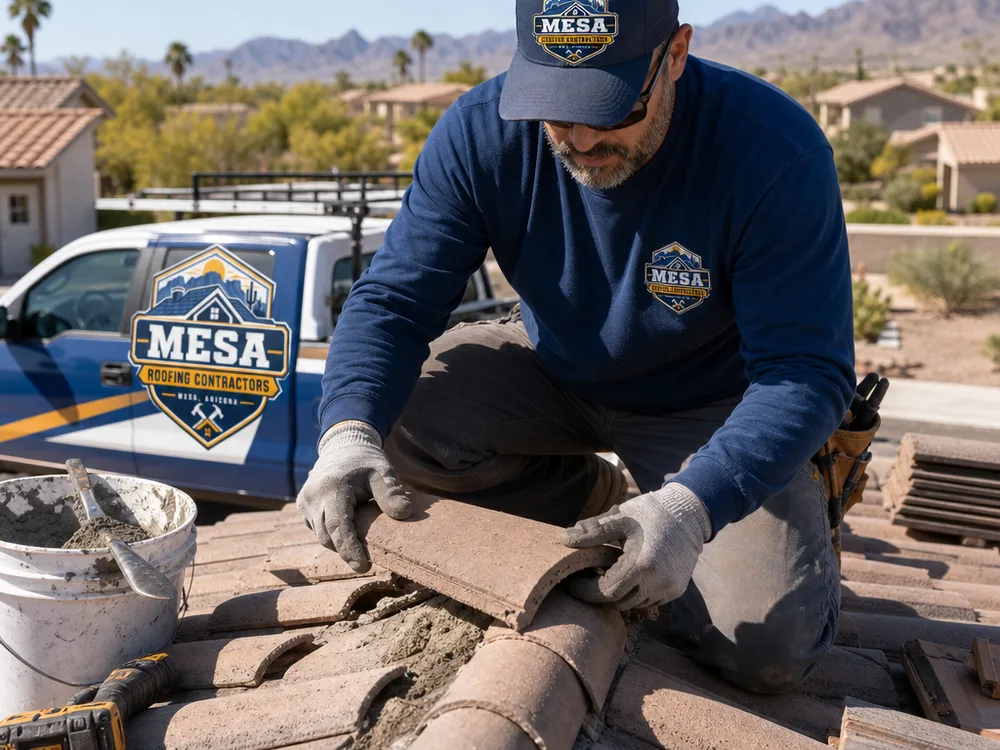
We remove damaged pieces without breaking surrounding tiles, replace with compatible tile, and confirm water-shedding alignment so the repair does not telegraph as a hump or dip.
Serving Mesa, Arizona & surrounding areas
Tile roof repair · Mesa, Arizona
Get cracked, slipped, and leaking roof tiles fixed with clean matching materials, proper underlayment tie-ins, and a repair plan that holds up to Arizona sun and monsoon rain.
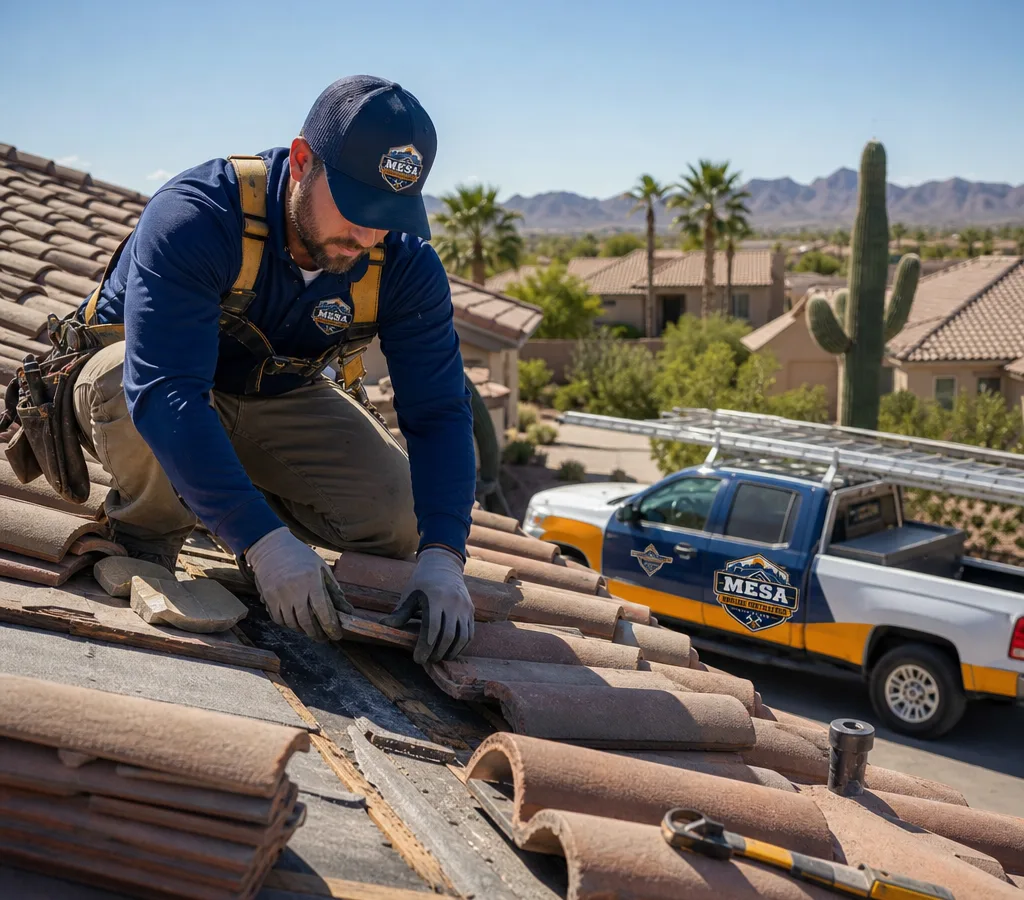
Tile roof warning signs
If you are searching for tile roof repair Mesa AZ, you are usually dealing with one of three things: broken tiles, tiles that have slid out of place, or a leak that shows up after wind-driven rain. Tile is tough, but it is not watertight by itself. The real waterproofing is the underlayment and flashings beneath the tile, and once those layers are exposed or disturbed, small issues can turn into ceiling stains, rotten decking, and higher repair cost.
Mesa Roofing Contractors focuses on pinpoint repairs that keep the roof system working as a system. That means replacing the right tiles, resetting areas that have shifted, repairing or replacing the flashing at the leak source, and restoring the weather barrier beneath the tile where it has failed.
Common signs you may need service:
If the roof is actively leaking, it is best to stop the water first and then correct the root cause. A fast patch that does not integrate with the underlayment or flashing can trap water and create a bigger problem later.
Complete repair scope
A quality tile repair is rarely just swapping a broken piece. The work has to address why the tile failed and what sits underneath it.
Here is what we inspect and repair most often:
Underlayment condition: In the Phoenix-area climate, intense UV and heat accelerate aging when underlayment becomes exposed. If tiles have slipped or broken, we check for cracks, brittleness, and lap failures and restore the barrier as needed.
Flashing details: Leaks commonly trace back to penetrations and transitions, not the middle of a field of tiles. We check pipe boots, wall and chimney flashings, valley metal, and any prior repairs that were surface-sealed.
Tile fastening and alignment: Concrete and clay tiles can move from wind uplift, foot traffic, and broken lugs. We reset tiles so water sheds correctly and the courses stay interlocked.
Ridge and hip areas: Ridge caps often rely on mortar or foam systems. When those materials degrade, caps can loosen and allow water entry. We repair the ridge line so it is secure and properly tied into the adjacent tiles.
The goal is a repair that looks clean from the ground and performs under wind-driven rain. If you are comparing providers, start with roofing contractors in Mesa who regularly work on tile systems and understand how tile, underlayment, and flashings work together.
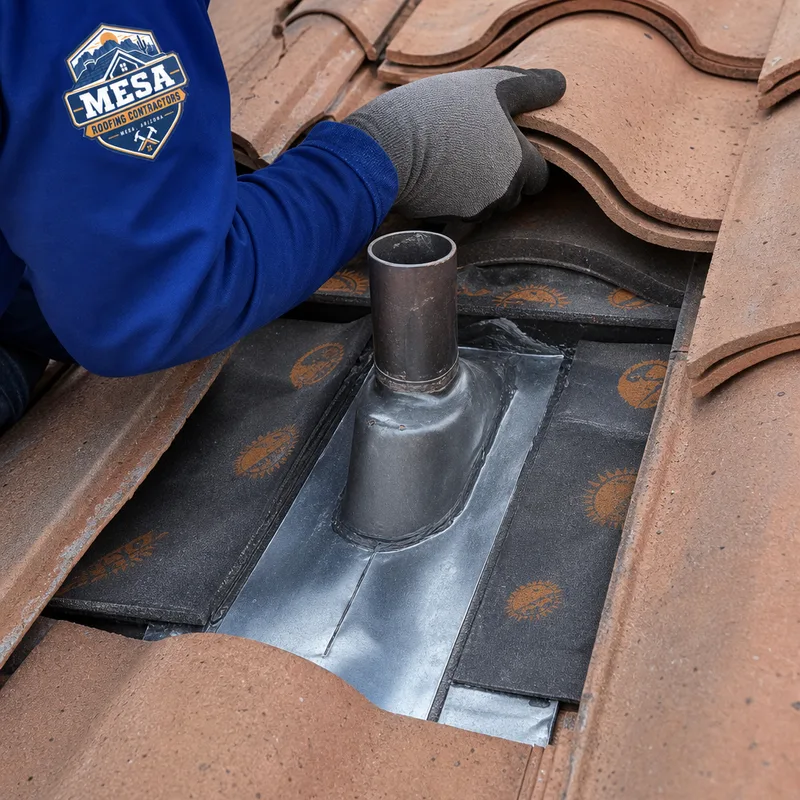
Targeted tile restoration
We remove damaged pieces without breaking surrounding tiles, replace with compatible tile, and confirm water-shedding alignment so the repair does not telegraph as a hump or dip.
We reset shifted areas and correct the cause, whether it is failed fasteners, broken lugs, or movement at hips and ridges that is pushing rows out of line.
Water can travel along underlayment and show up far from the entry point. We trace the path, inspect flashings and valleys, and repair the actual source.
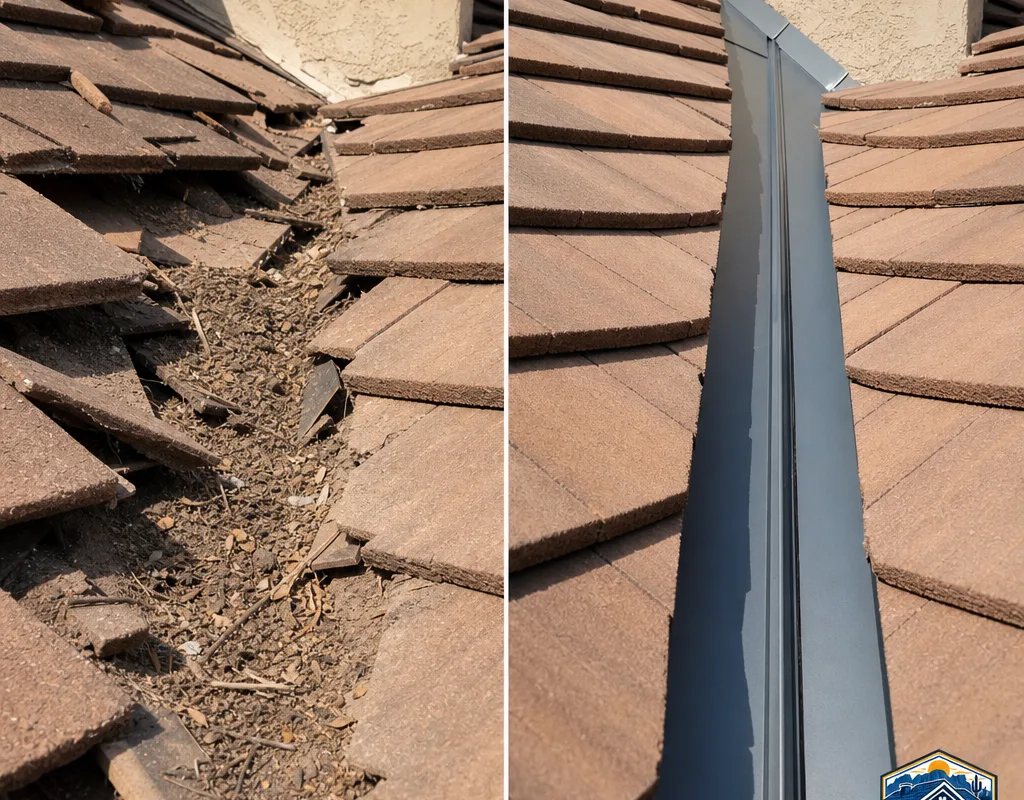
Valleys handle concentrated runoff. We clear blockage, correct tile cut lines if needed, and repair valley metal and underlayment tie-ins where failures typically start.
Loose caps can allow wind and water under the system. We secure and re-bed caps where needed and restore the ridge detail so it sheds water properly.
We aim for close material match and clean lines. When exact tile is not available, we discuss practical options so you know what the finished roof will look like.
Mesa tile roof conditions
Tile roofs perform well in Arizona, but the environment changes how repairs should be approached.
Heat and UV exposure: Prolonged sun and high roof-surface temperatures can accelerate aging of exposed components. When a tile breaks or slips, underlayment can be exposed at the edges and deteriorate faster than homeowners expect.
Monsoon-style downpours: Short, intense storms push water sideways. That is when weak points around penetrations, ridges, and valleys tend to show up. Repairs that rely on surface sealant alone often fail when wind-driven rain gets under the tile.
Foot traffic damage: Tile can crack from improper walking paths. If other trades have been on the roof for HVAC or solar-related work, we frequently find isolated breakage and displaced tiles near access points.
Neighborhood examples we commonly work around in Mesa:
If your roof has multiple prior repairs, we also look for mixed methods—mortar in one area, foam in another, or incompatible sealants—that can create new leak paths.
Book Your Free InspectionRoof inspection process
We check the tile field, ridges and hips, valleys, and flashings. For leak calls, we focus on finding the entry point rather than the ceiling stain location.
You get a clear description of what is damaged, what needs to be removed, and what gets rebuilt. If tile matching is a variable, we discuss realistic finish outcomes before work starts.
We lift and remove only what is necessary, protecting surrounding tiles. If the deck or battens are compromised, we address that before resetting tiles.
We restore the waterproofing layer and integrate flashings properly at penetrations and transitions. This is the part of the repair that stops repeat leaks.
We reinstall tiles with correct alignment, confirm drainage paths in valleys and at edges, and clean up any debris from the work area.
Tile repair cost guidance
Tile roof repair in Mesa typically ranges from $350 to $1,500 for small, localized fixes, while larger leak repairs involving underlayment or valley and flashing work often run $1,500 to $4,500+. Replacing a handful of cracked tiles is usually on the lower end; rebuilding a problem area where water has traveled under the tile costs more.
Final price depends on roof height and access, how many tiles must be lifted to reach the failure, tile type and availability for matching, and whether underlayment, decking, or flashings need repair. Exact pricing is confirmed after an on-roof inspection and a written scope.
Typical tile repair scenarios
Homeowner questions
Yes, many tile roof issues in Mesa are localized and can be repaired by replacing damaged tiles and restoring underlayment or flashing only in the affected area. The key is confirming the waterproofing layer beneath the tile is intact and properly lapped into surrounding materials so the repair does not become the next leak point.
Because tile is a water-shedding surface, not the primary waterproof barrier; leaks often come from underlayment deterioration, failed flashings at penetrations, or problems in valleys and transitions. In wind-driven monsoon rain, water can be pushed under tiles and travel until it finds an opening, so the ceiling stain is not always near the entry point.
Sometimes, yes. A proper repair may require lifting enough tiles to expose the damaged underlayment seam, valley metal edge, or flashing connection so it can be rebuilt correctly. Minimizing lifted area is good, but too small of a cutout can leave deteriorated material in place and lead to repeat leaks.
Often we can get a close match, but exact matches depend on manufacturer, profile, color blend, and whether the tile is still produced. During inspection we look at tile type and condition and explain your options, including using matching tiles from less visible areas when appropriate and acceptable.
Many single-area repairs can be completed in one visit, but leaks that require underlayment rebuilds, valley reconstruction, or multiple problem areas may take longer. Timeline depends on access, the amount of tile that must be removed and reset, and whether matching tile needs to be sourced.
Hairline cracking can happen as materials age and expand and contract, but loose or missing mortar at ridge caps is a repair item because it can allow water entry and can lead to movement of the caps in wind. We inspect the ridge and hip detail and recommend the repair method that best fits the existing system.
Yes. Even if you contact us for one leak or a few broken tiles, we scan the surrounding slopes for slipped tiles, valley debris, and flashing issues so you have a clear picture of near-term repair needs. If you also need help with other roof types or broader issues, Mesa Roofing Contractors provides roofing services for the area.
Free on-roof inspection
Tell us what you are seeing—leak location, storm timing, broken tiles, or slipped areas—and we will schedule an on-roof inspection in Mesa, explain the cause, and provide a written repair scope you can trust.