
Inspection that matches the roof type
Tile, asphalt shingle, and flat/low-slope roofs fail in different ways. We inspect for the issues that actually apply, including underlayment concerns on tile roofs and flashing details that cause most leaks.
Serving Mesa, Arizona & surrounding areas
Our roofing process · Mesa, Arizona
See how our Mesa roofing company moves from inspection and documentation to a written scope, careful roof work, cleanup, and a final walkthrough.
A clear process from the start
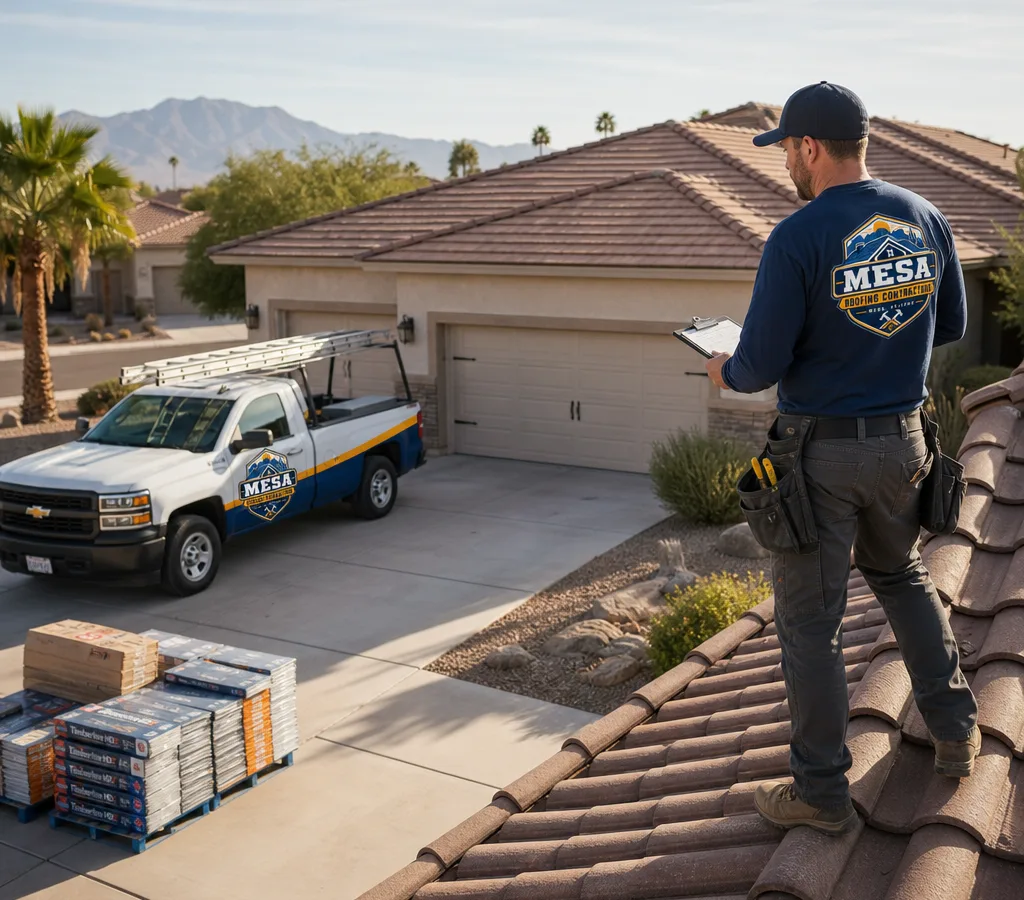
If you are comparing roofing companies Mesa AZ homeowners use year after year, look closely at the process behind the proposal. Our work starts with an on-site inspection, clear documentation, and practical recommendations before any repair or replacement is scheduled.
Mesa roofs take a beating from intense sun, big temperature swings, and seasonal storms. Our process checks the full system—surface materials, flashings, penetrations, transitions, and ventilation—then turns those findings into a written scope, a defined schedule, controlled installation, and a final walkthrough.
The standards built into our roofing process include:
If you also want to see what our team does across the Valley, our roofing contractors in Mesa overview explains our approach to inspections, scopes, and quality control.
What our process includes
Tile, asphalt shingle, and flat/low-slope roofs fail in different ways. We inspect for the issues that actually apply, including underlayment concerns on tile roofs and flashing details that cause most leaks.
You get the tradeoffs: expected lifespan, risk of repeat leaks, and what a repair can and cannot accomplish when materials are aged or multiple areas are failing.
A good quote tells you what is included: tear-off, if any, decking review, underlayment, flashings, ventilation, edge metal, and where debris goes.
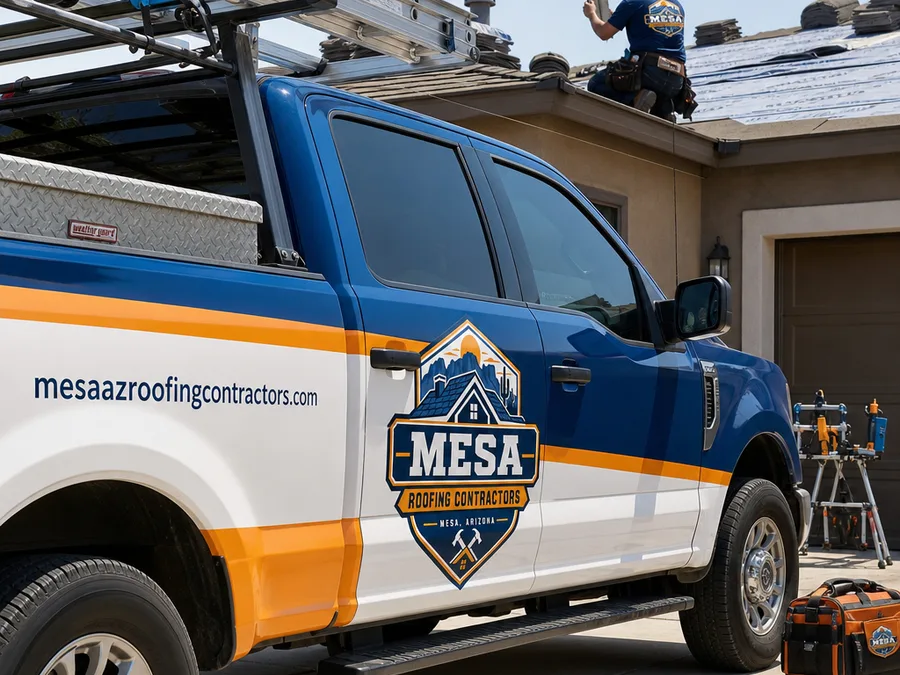
Roofing is messy if it is unmanaged. We plan for staging, protect access paths, and keep nails and scraps from migrating into driveways and yards.
Many Mesa homes have stucco exteriors and rooftop penetrations near HVAC lines and vents. We plan transitions and clearances so details are correct and serviceable.
You should know what happens next: inspection findings, options, timing, and what the crew will do each day so there are no surprises when the work starts.
Mesa roof systems
People searching roofing companies Mesa often have one main question: “Can you handle my roof type?” In Mesa, you will commonly see asphalt shingles, concrete or clay tile, and flat or low-slope sections on patios and additions. Each needs a different inspection lens.
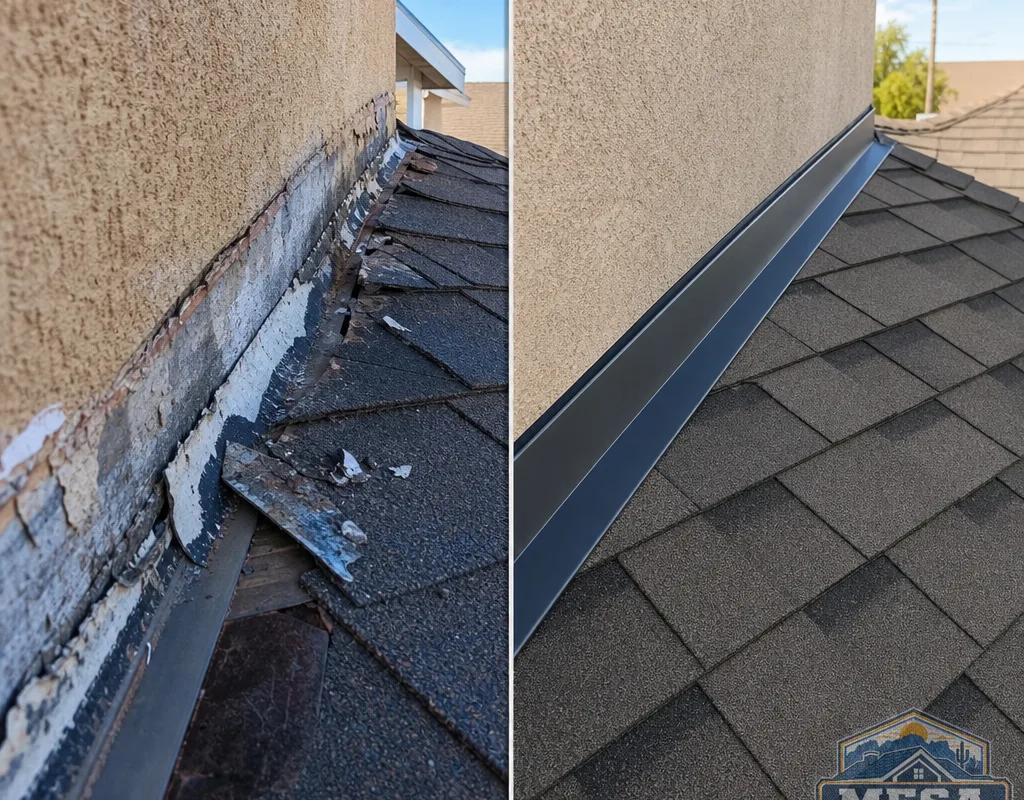
Asphalt shingle roofs: we look for heat-aged cracking, granule loss, lifted or missing tabs after storms, and nail pops that create a direct water path. We also check valleys and wall flashings, because leaks often start at transitions, not in the middle of the field.
Tile roofs: the surface tile can look fine while the underlayment and flashings are near the end of their life. We check for slipped or broken tiles, soft spots, and the details that keep water out at penetrations and edges.
Flat and low-slope areas: ponding risk, seam integrity, and edge terminations matter. Many leak calls come from scuppers, parapet transitions, and old sealant at penetrations.
If you are dealing with active leaking, the fastest way to get control is an on-site evaluation so the fix targets the real entry point, not the interior stain.
Our five-step roofing process
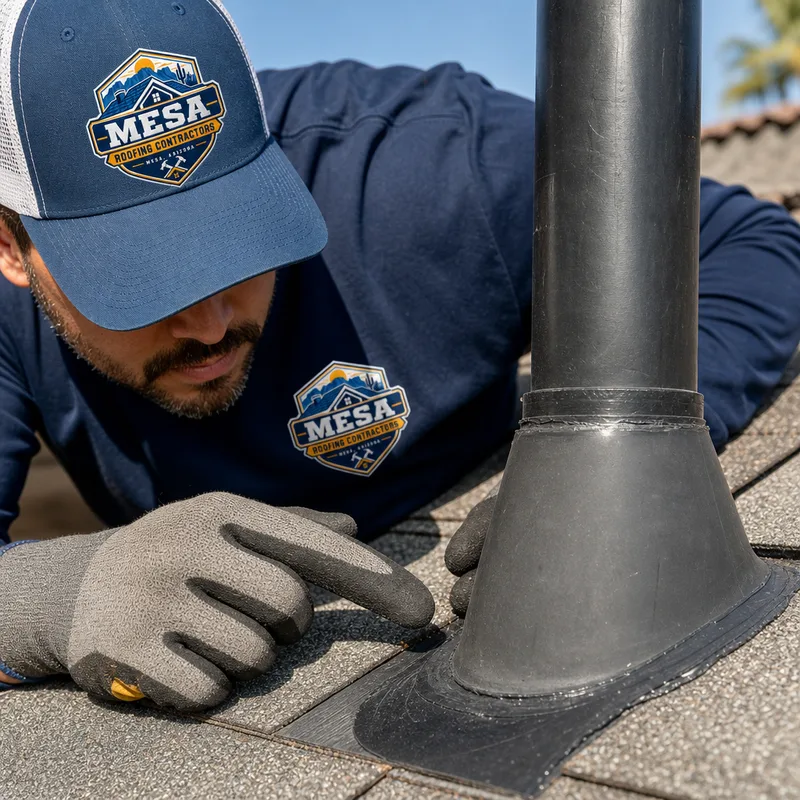
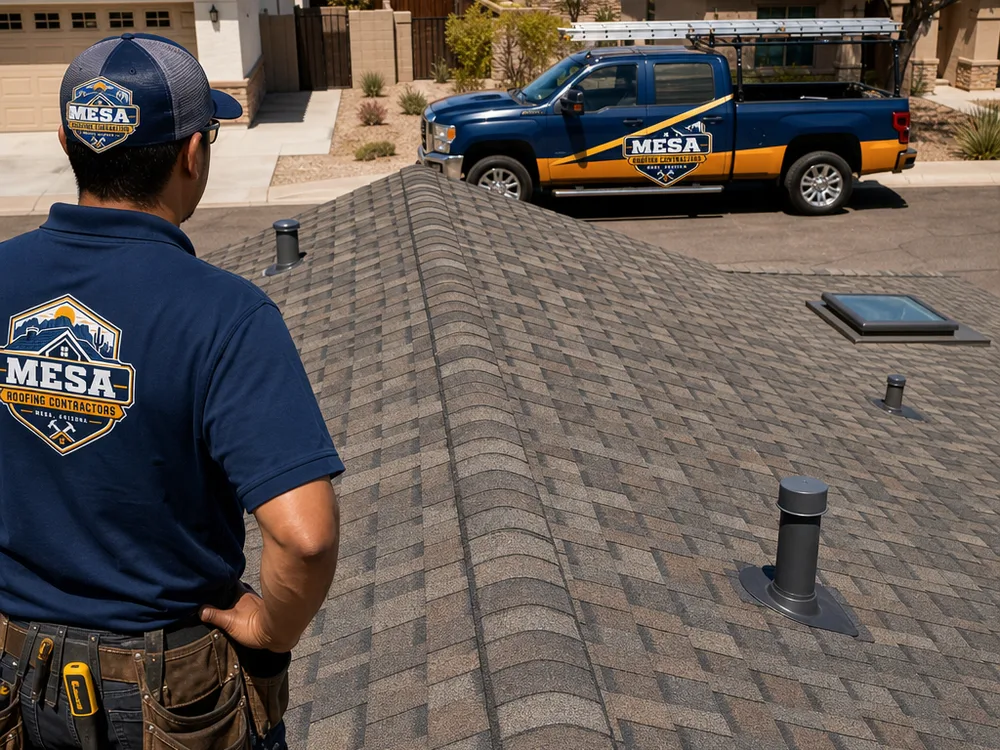
We walk the roof, check the areas where leaks and blow-offs start—edges, penetrations, valleys, and wall transitions—and document findings so you can see what we see.
You get repair and replacement options when they make sense, with a scope that spells out materials, critical details such as flashings, underlayment, and ventilation, and cleanup.
Before work begins, we confirm access, material staging, protection for landscaping and stucco walls, and where the dumpster or haul-off will go.
Our focus is the full water-shedding system: correct flashing details, proper transitions, and workmanship that holds up through heat and storms.
We police the site for debris, verify the scope items were completed, and answer maintenance questions so you know what to watch for after heavy weather.
Mesa roofing cost guidance
Most roofing work in Mesa typically ranges from about $450 to $1,500 for many common repairs, while a full roof replacement often runs roughly $9,000 to $25,000+ depending on roof size, pitch, layers to remove, and the material system.
Your final price changes with access, roof complexity—valleys, hips, and multiple levels—decking condition, flashing and ventilation needs, and whether there are tile/flat-roof transitions. The exact cost is confirmed after an on-site inspection and a written scope.
Roofing workmanship details
Mesa homeowner feedback
“We got a clear scope in writing and photos of the problem areas. The crew kept the driveway clean and the repair held through the next heavy storm.
“What I appreciated most was the straight answer on repair versus replacement. No pressure, just a plan that made sense for our roof.
“They explained the flashing work in a way I could understand and didn't leave debris around the yard. Communication was consistent from start to finish.
Process questions
Compare scopes, not totals: the quote should list the roof system components that control leaks and longevity, especially underlayment, flashings, edge metal, ventilation, and cleanup. If one quote is missing line items around penetrations, wall transitions, or tear-off, it can look cheaper but leave critical work unaddressed.
A repair makes sense when the issue is isolated and the surrounding materials still have usable life, while replacement becomes the safer plan when multiple areas are failing or the system is near the end of its service life. In Mesa, heat aging can make shingles and sealants brittle, so we look closely for widespread cracking, repeated leak points, and failing flashings before recommending a direction.
Many residential replacements are completed in 1 to 3 days once work starts, but complex roofs, tile handling, decking repairs, and weather can extend that timeline. We set expectations during the inspection and confirm the schedule again once materials and access are coordinated.
Most leak calls trace back to flashings and transitions, not the middle of the roof field. Penetrations such as vents and pipe boots, valleys, and wall or chimney transitions are frequent culprits, especially when sealants have baked in the sun and then see wind-driven rain during storms.
Yes, but it takes the right handling and staging. Tile work often involves lifting and resetting tiles to address underlayment or flashing issues, and a careful crew plans walking paths and stacks tiles properly to reduce breakage and keep lines consistent when reinstalled.
Ask who will be on-site managing the work, what the written scope includes for flashings and ventilation, how decking issues are handled if discovered, and what the cleanup process looks like each day. A reliable answer is specific and ties back to your roof type and the details that actually stop leaks.
Free on-site inspection
Tell Mesa Roofing Contractors what you are seeing, and we will inspect the roof, explain repair and replacement options, and provide a written scope you can compare confidently with other roofing companies in Mesa AZ.